I agree Our site saves small pieces of text information (cookies) on your device in order to deliver better content and for statistical purposes. You can disable the usage of cookies by changing the settings of your browser. By browsing our website without changing the browser settings you grant us permission to store that information on your device.
Southern Liquid Systems deliver specialist liquid roofing systems engineered for the demanding conditions of commercial and industrial buildings across the United Kingdom. Southern Liquid Systems design and install liquid-applied roofing solutions for a wide range of property types, including office buildings, industrial units, logistics centres, retail developments, public-sector facilities, and complex refurbishment projects. UK commercial buildings frequently present challenging roof geometries, aging substrates, restricted access, and high levels of rainfall, all of which place exceptional performance demands on roofing systems. Every liquid roofing system installed by Southern Liquid Systems is engineered to deliver seamless waterproofing, long-term durability, and resistance to the prolonged moisture exposure common throughout the UK.
Southern Liquid Systems provide a full range of professional liquid roofing services, including new liquid roof installations, targeted liquid roof repairs, refurbishment of existing flat roofs, and ongoing inspection and maintenance programmes. Each service is delivered with a focus on long-term waterproof integrity, compliance with UK building regulations, rooftop safety requirements, and minimal disruption to occupied commercial buildings. By utilising high-performance liquid-applied waterproofing technologies, Southern Liquid Systems deliver roofing systems that reduce lifecycle costs, accommodate complex detailing, and extend the service life of commercial roofs across the UK.
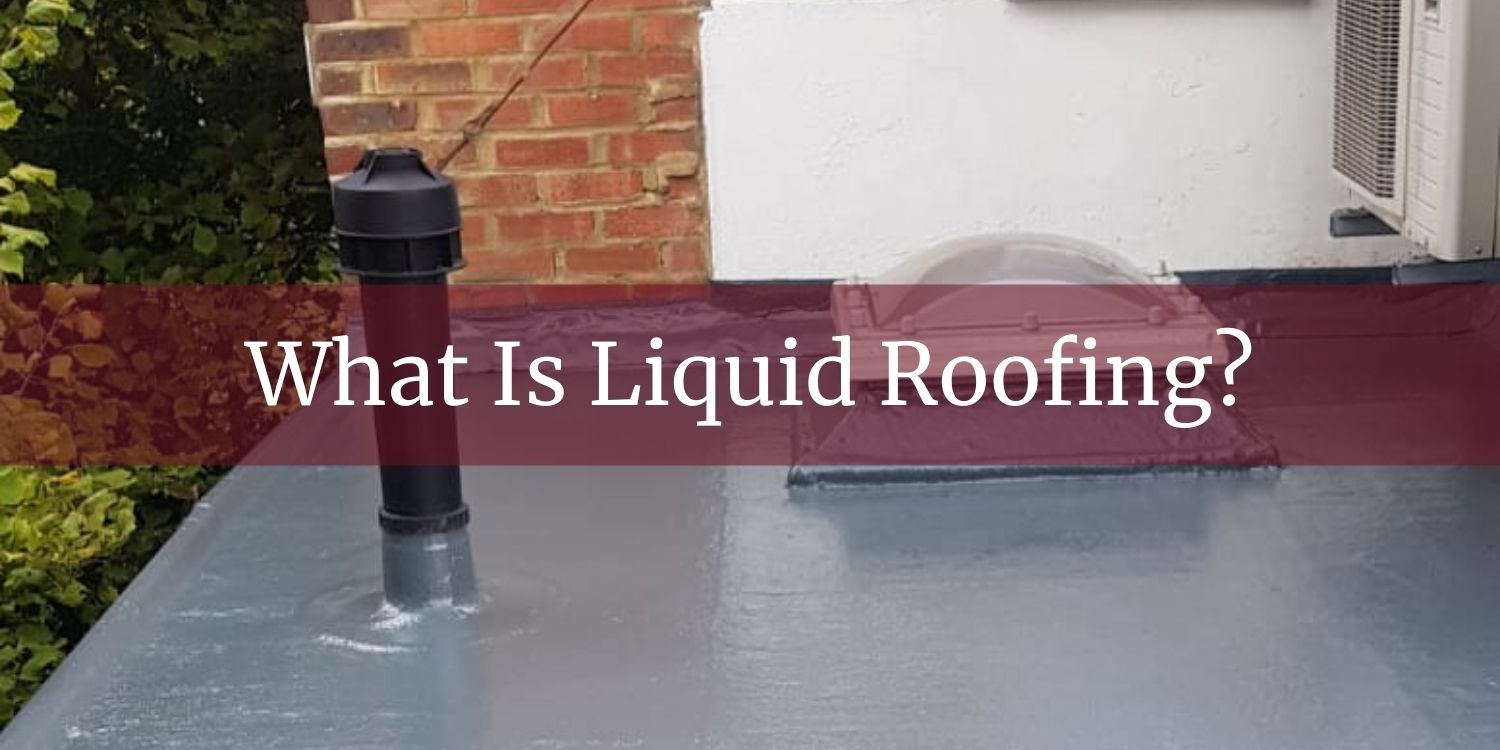
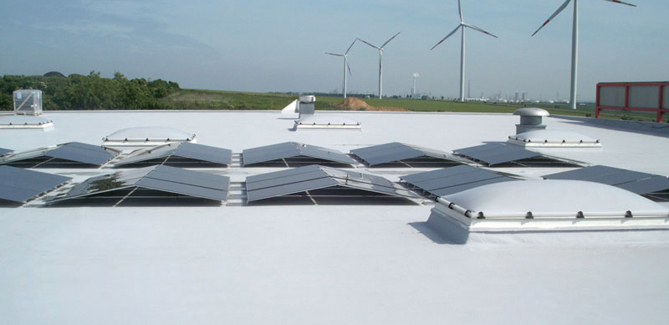
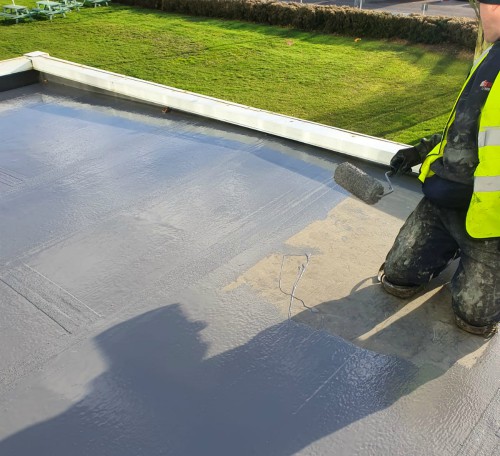
Liquid roofing is the design, installation, and maintenance of seamless, liquid-applied waterproofing systems specifically engineered for flat and low-slope commercial and industrial roofs. In the UK, liquid roofing is widely used where traditional roofing systems are impractical due to complex detailing, restricted access, aging roof substrates, or the need to avoid disruptive strip-and-replace works. Liquid roofing systems are cold-applied and form a fully bonded, joint-free membrane that conforms to the existing roof structure, encapsulating penetrations, upstands, and irregular geometries without introducing weak points.
UK commercial buildings often rely on liquid roofing solutions to manage persistent rainfall, ponding water, thermal movement, and ongoing maintenance traffic. Liquid-applied systems provide high elasticity, allowing them to accommodate substrate movement and temperature fluctuations without cracking or splitting. They are commonly used on refurbishment projects, balconies, terraces, plant areas, and roofs with complex drainage layouts where traditional sheet systems struggle to maintain long-term watertight performance. When correctly specified and installed, liquid roofing systems deliver durable, compliant, and weather-resistant waterproofing that protects commercial buildings while extending the life of the existing roof structure.
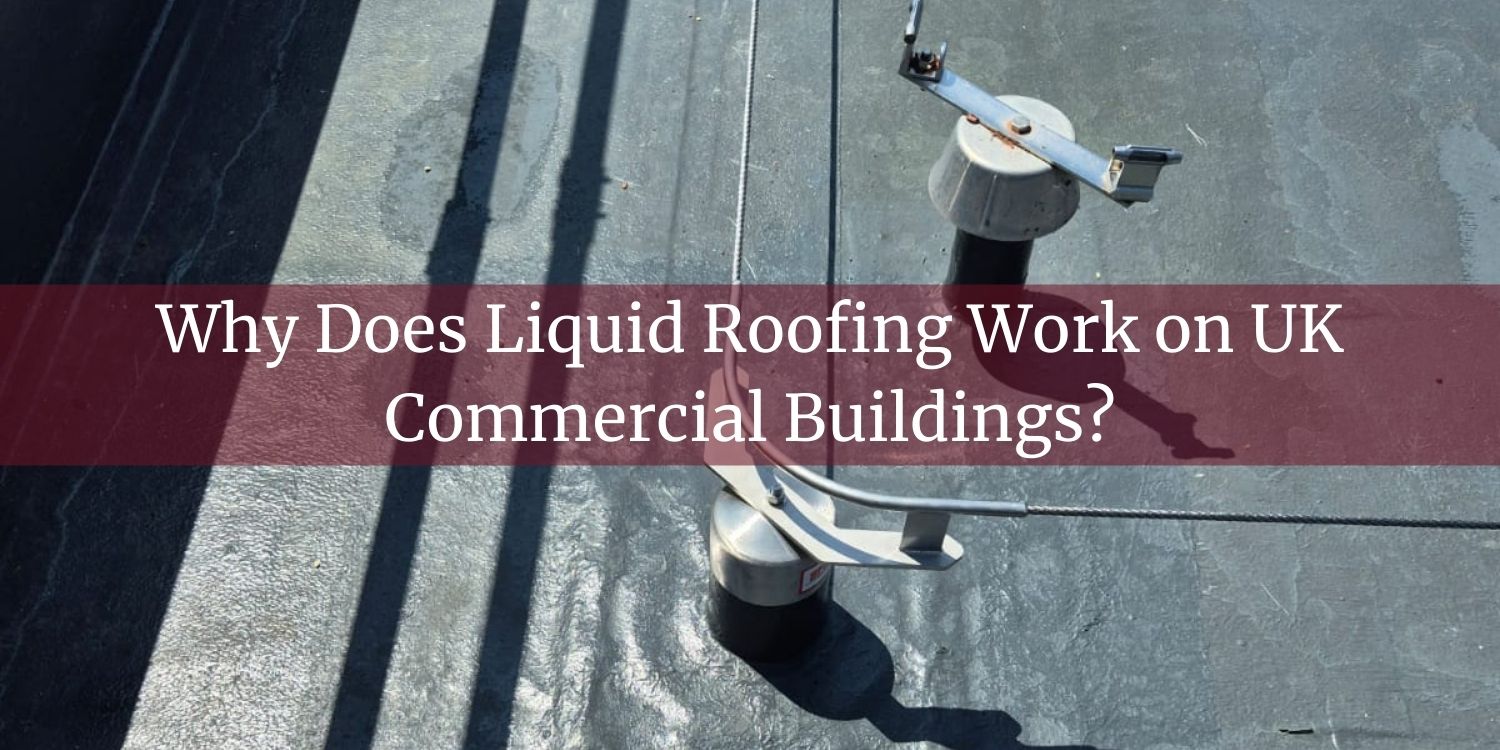
Liquid roofing works on UK commercial buildings because it is engineered to perform under the country’s persistent rainfall, prolonged moisture exposure, complex roof geometries, and the refurbishment-driven realities of aging commercial building stock. Unlike traditional sheet-based roofing systems, liquid-applied roofing systems are designed to form a fully bonded, seamless waterproof membrane that conforms to irregular substrates, penetrations, and detailing conditions commonly found on UK commercial roofs. Office buildings, industrial units, logistics centres, retail developments, and public-sector properties frequently present restricted access, legacy roof structures, and ongoing occupancy requirements that limit disruptive strip-and-replace solutions. Prolonged wet weather, ponding risk, thermal movement, and maintenance traffic all influence how commercial roofs must be waterproofed and maintained in the UK. By aligning system specification, detailing methods, and installation strategy with these operating conditions, liquid roofing delivers durable, compliant waterproofing solutions that protect commercial buildings while extending the service life of existing roof structures.
These UK-specific system characteristics create the following material-level roof performance outcomes:
Each of these material-level performance outcomes is produced by a coordinated set of substrate assessment, system specification, detailing design, reinforcement strategy, and controlled installation methods, which are applied to ensure liquid roofing systems perform reliably on UK commercial buildings.
UK commercial roofs rarely present simple, uninterrupted surfaces. Roof layouts typically include penetrations for mechanical services, upstands around plant bases, internal and external drainage outlets, parapet interfaces, and perimeter edge details that are difficult to waterproof using rigid or sheet-based membranes. These conditions are further complicated on refurbishment projects, where legacy details and irregular substrates are common. Liquid roofing systems are engineered to conform directly to these complex geometries, forming a continuous, fully bonded membrane that encapsulates penetrations, interfaces, and transitions without joints, laps, or cut seams. This allows critical details to be waterproofed at the system level rather than relying on multiple termination points, reducing the likelihood of long-term failure at historically vulnerable locations.
Many UK commercial buildings must remain occupied and operational during roofing works, including offices, schools, healthcare facilities, retail environments, and public-sector properties. Traditional roofing systems often require hot works, naked flames, or disruptive installation processes that increase risk and restrict access on live sites. Liquid roofing systems are cold-applied and fully bonded, eliminating the need for heat or flame during installation. This significantly reduces health and safety risk, simplifies compliance with fire-safety procedures, and allows waterproofing works to proceed without interrupting building operations. As a result, liquid roofing is particularly suited to sensitive environments where continuity of use is a critical requirement.
Flat and low-slope commercial roofs in the UK are subject to prolonged rainfall, intermittent ponding, and repeated cycles of thermal expansion and contraction throughout the year. These conditions place continuous stress on roof membranes, particularly at seams, joints, and interfaces where movement is concentrated. Liquid roofing systems are designed with high elasticity and tensile strength, allowing the membrane to accommodate thermal movement and substrate deflection without cracking or splitting. Because the system is fully bonded to the substrate, water cannot migrate beneath the membrane, preserving waterproof integrity even under sustained wet conditions and slow drainage scenarios.
A large proportion of UK commercial roofing projects involve refurbishment rather than new construction. Existing roofs often contain aging membranes, mixed substrates, and accumulated detailing that make full strip-and-replace solutions disruptive, costly, and environmentally inefficient. Liquid roofing systems can be applied directly over suitable existing substrates following appropriate preparation, allowing the roof to be refurbished without removing the underlying structure. This approach reduces waste, shortens programme duration, minimises disruption to occupants, and extends the service life of the existing roof while maintaining compliance and long-term waterproof performance.
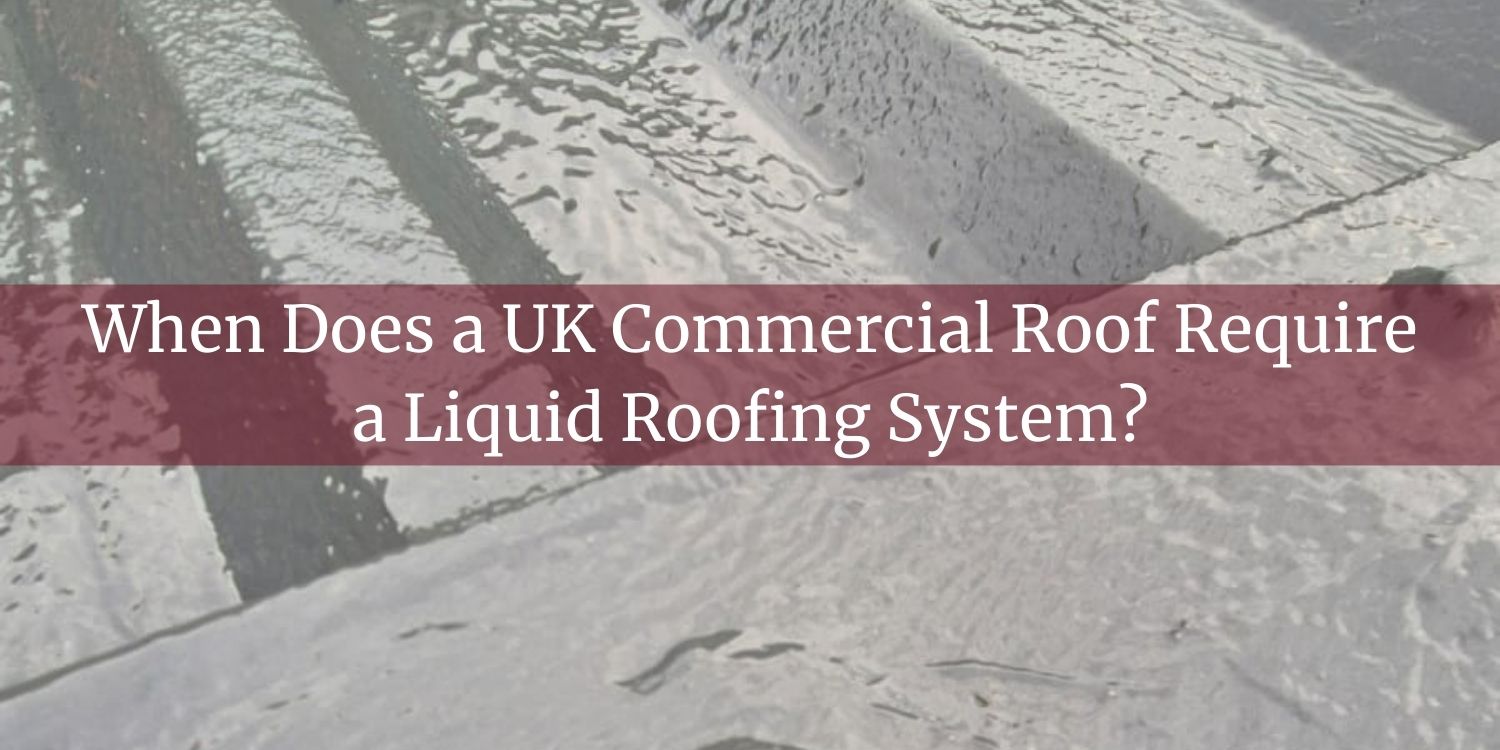
A UK commercial roof typically becomes a candidate for a liquid roofing system when traditional membranes begin to fail at details, interfaces, or penetrations, or where refurbishment is required without disrupting building operations. Persistent leaks, recurring localised repairs, ponding water, aging roof substrates, and movement-related failures are common indicators that a fully bonded liquid-applied system may provide a more reliable long-term waterproofing solution. Liquid roofing is particularly suited to commercial buildings with complex roof layouts, restricted access, ongoing occupancy, or legacy roof structures where strip-and-replace solutions introduce excessive risk, cost, or operational disruption. Office buildings, logistics centres, retail developments, public-sector facilities, and industrial properties frequently present these conditions, especially where roofs have been modified over time to accommodate additional plant, services, or drainage alterations.
Southern Liquid Systems assesses commercial roofs based on how they are performing under real operating conditions, including substrate integrity, drainage behaviour, movement tolerance, detailing condition, and exposure to prolonged moisture. This allows the most technically appropriate waterproofing strategy to be identified, whether that involves targeted repair, refurbishment using a liquid roofing system, or an alternative solution aligned with the building’s structure and use. A professional roof assessment ensures that liquid roofing is specified only where it delivers genuine performance and lifecycle benefits, providing commercial building owners and facilities teams with a clear, technically sound path forward based on the condition of their roof rather than a one-size-fits-all recommendation.
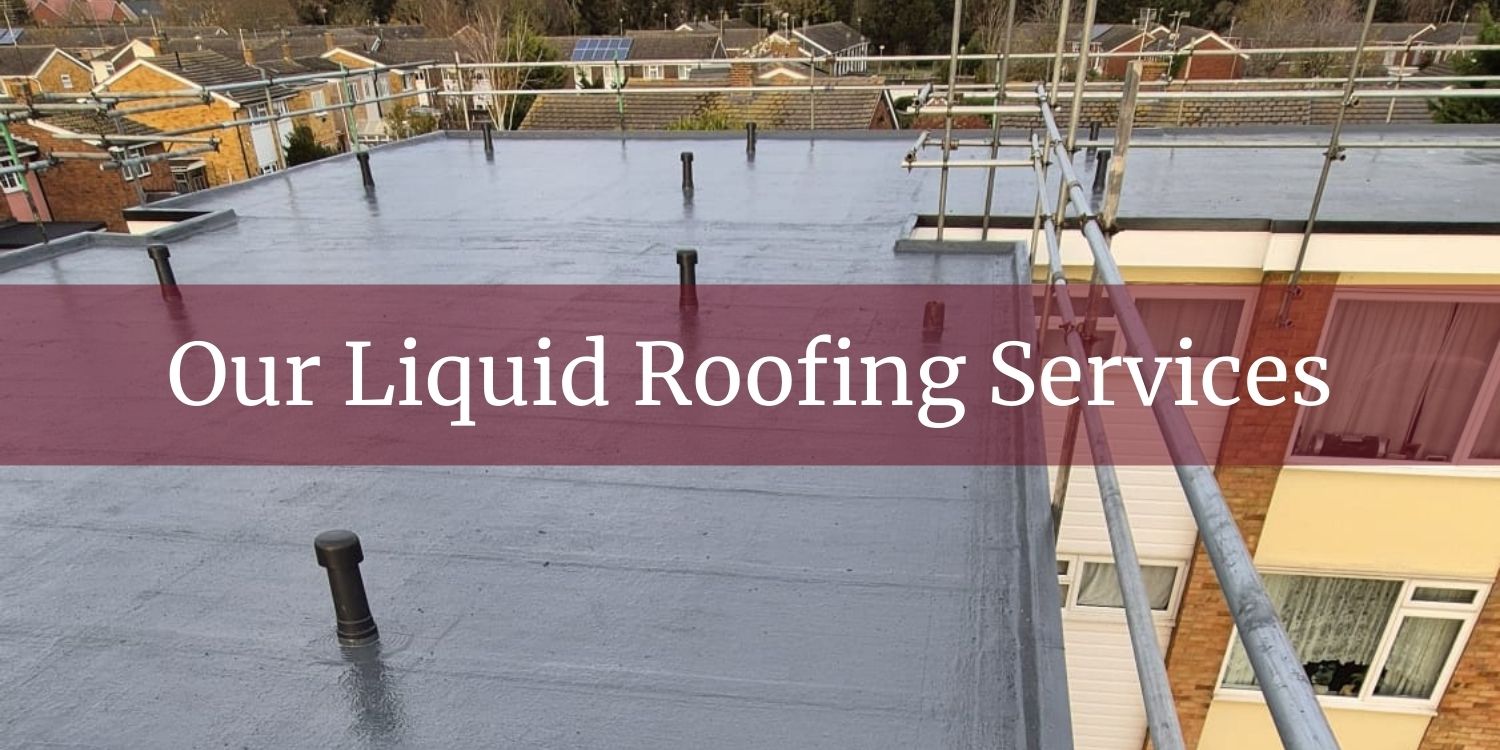
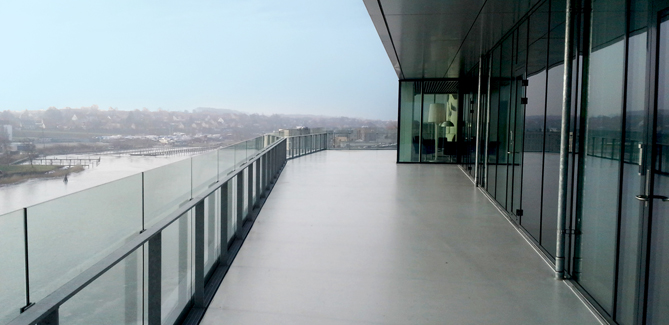
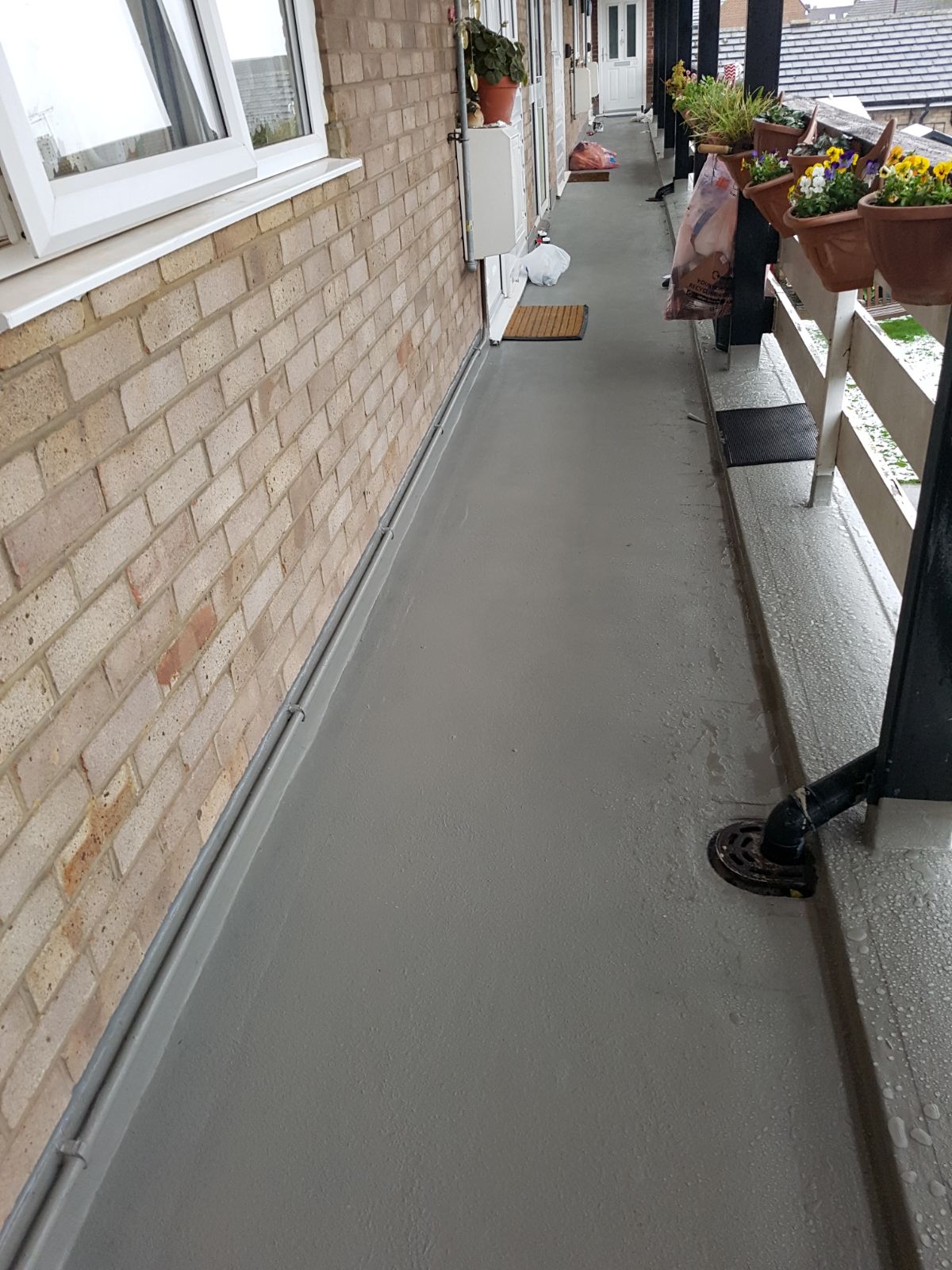
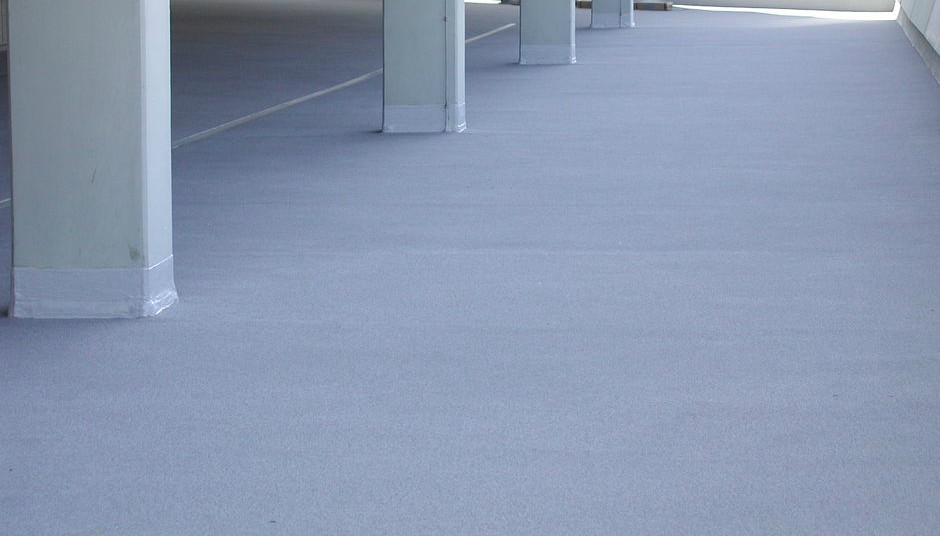
Southern Liquid Systems deliver cold-applied liquid roofing and waterproofing systems engineered for commercial and complex building environments. Liquid systems are used across commercial flat roofs, roof refurbishments, balconies, walkways, podium decks, basements, and car parks where seamless waterproofing, detailing flexibility, and minimal disruption are required. Each system is specified based on substrate condition, access constraints, exposure to moisture, and long-term performance requirements rather than a one-size-fits-all approach. This allows liquid roofing solutions to be applied where traditional membranes are impractical or where refurbishment must be carried out without interrupting building operations.